1. RUBIK PD
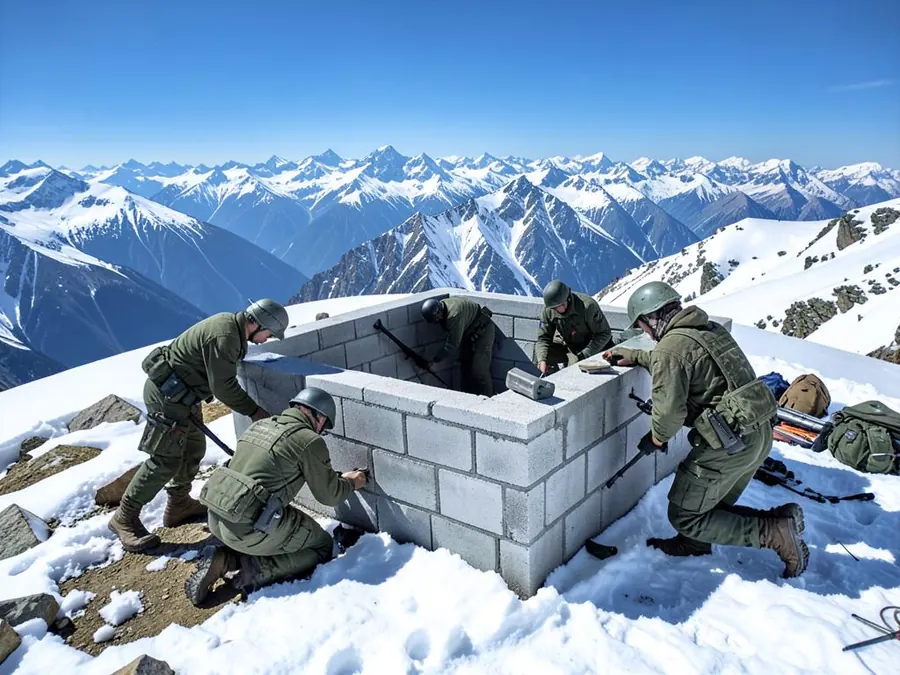
Patented interlocking bunker
150 blocks of 17 kg, dry-stacked into a rifle-resistant position in under seven hours. Developed with 52 Engineer Regiment, Corps of Engineers, and the Army Design Bureau.
Enquire →Systems and technology
The five systems, how the composite panel is built up, how the joint seals without site-applied sealant, the four positions one block makes, and what changes when the concrete is cast in a factory instead of on the ground.
Patented interlocking bunker
150 blocks of 17 kg, dry-stacked into a rifle-resistant position in under seven hours. Developed with 52 Engineer Regiment, Corps of Engineers, and the Army Design Bureau.
Enquire →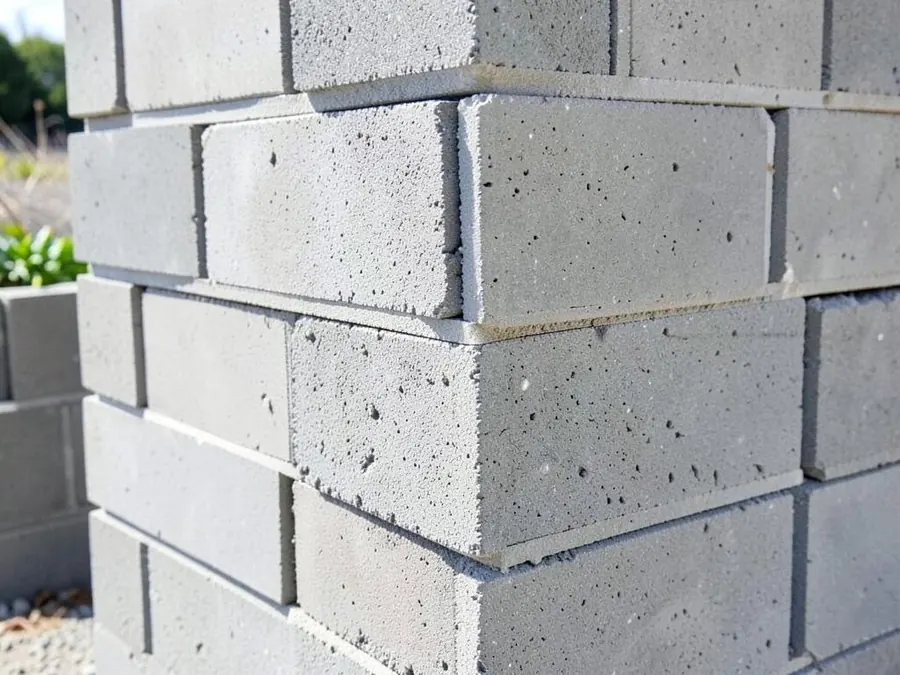
Dry-stack walling for high altitude
Half the weight of PCC, four times the lateral stability, and a capillary break that keeps seepage out of the joint. Nothing is mixed or poured at the position.
Enquire →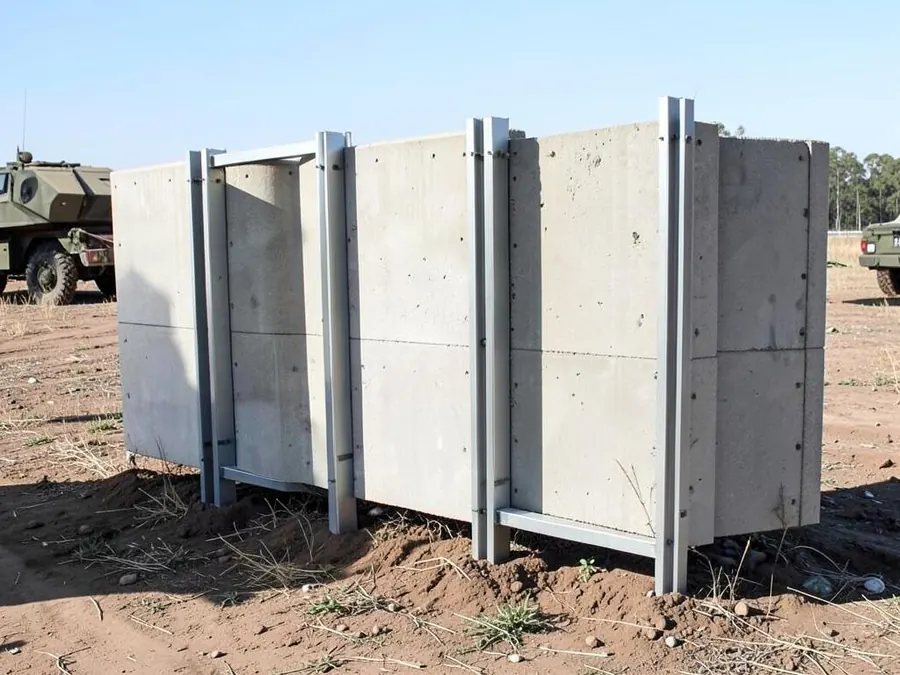
Breast walls and rapid posts
Ballistic concrete plates slide into light steel frames. Under 10 kg a plate, three personnel, operational in roughly four hours.
Enquire →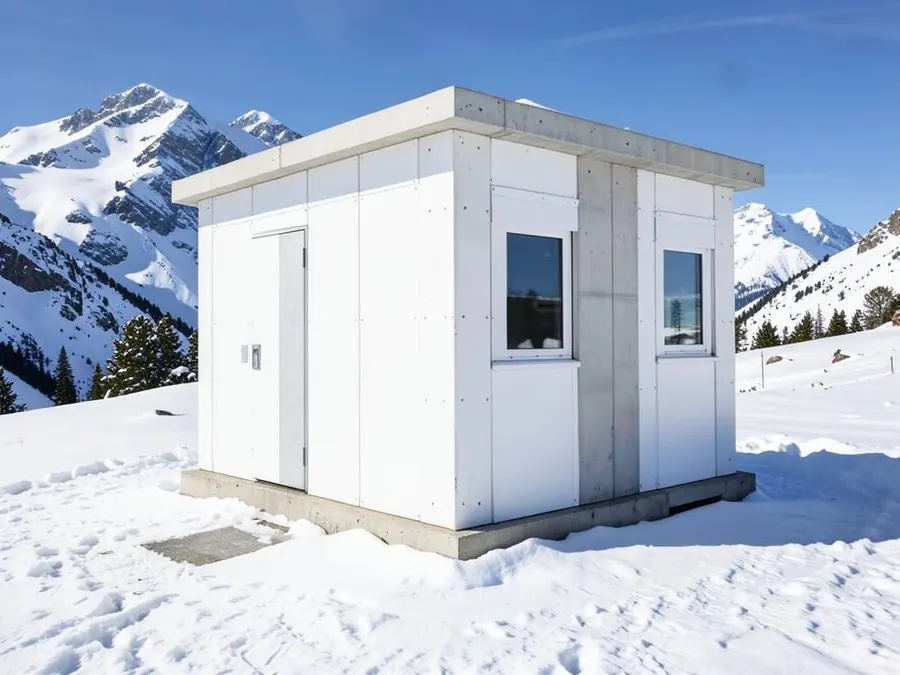
Insulated panel shelter for remote posts
Hard ultra-high-performance concrete skins over an insulating core, joined by a gasketed interlock instead of field-applied sealant.
Enquire →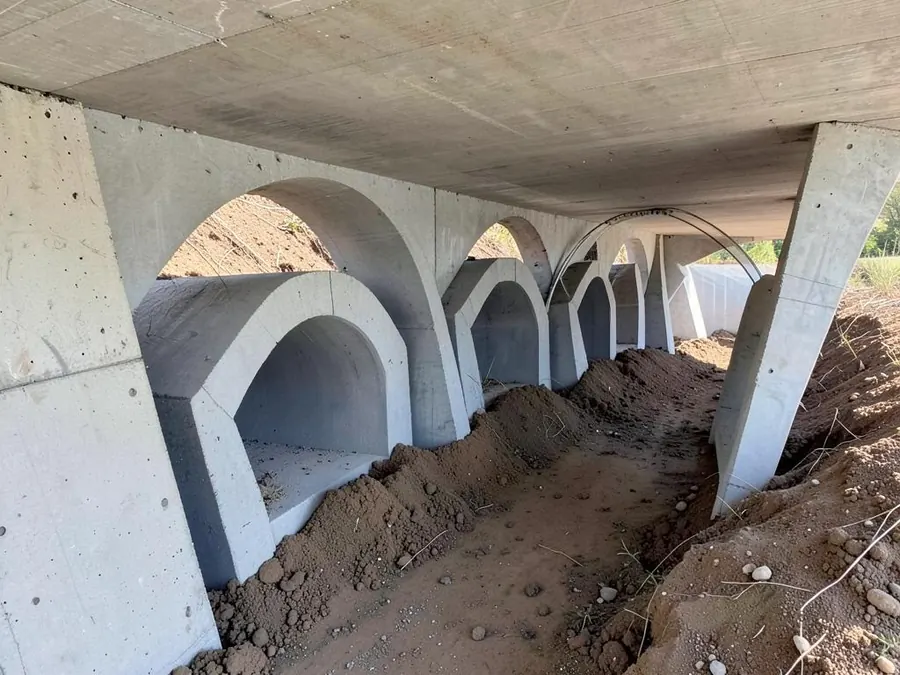
Modular precast communication trench
Interlocking walls and an arched roof, soil-filled for blast and soil pressure. Sections are replaced individually rather than cut out and recast.
Enquire →RUBIK PD was developed in collaboration with 52 Engineer Regiment, Corps of Engineers, and the Army Design Bureau. The research reads the same lessons the Army is reading: Russia–Ukraine, subterranean warfare, and the rise of loitering munitions and kamikaze drones against static positions.
Roughly twelve to twenty weeks from a frozen specification to a pilot on your ground. Performance figures are confirmed by testing at an approved laboratory for each project and its stated threat level.
Weeks 1–2
Specification fixed against your threat level and siting.
Weeks 3–6
Panels built from the frozen drawing, under process control.
Weeks 7–12
Airtightness, thermal, structural, durability, fire.
Weeks 13–14
Assembled on your ground by your own team.
Weeks 15–20
Limited roll-out with the data pack and training module.
The questions that come up before a specification does.
Yes, because nothing cures on site. Every unit is cast, cured and tested under factory control in Pan India and carried up finished. Assembly is dry, so there is no water, cement or aggregate at the position and no pour waiting on the weather.
A RUBIK PD position goes up in under seven hours with four soldiers: about thirty minutes to level the surface, two and a half hours to stack and lock the blocks, an hour and a half for the window, door and infill, and two and a half hours for the finish coat and overhead protection.
A RUBIK PD block weighs 17 kg and a position uses about 150 of them. A ballistic plate is under 10 kg. Everything is sized as a man-portable load, because machinery stops well short of a post at 4,300 metres.
Repair is sectional. The affected unit is swapped rather than cut out and recast, and RUBIK PD is repairable in place without losing strength or protection.
RUBIK PD is relocatable at no cost when siting considerations change, since the blocks are dry-stacked rather than bonded. Field of view and field of fire are adjusted by changing the block layout.
By testing at an approved laboratory for each project and its stated threat level. The route from a frozen specification to a pilot on your ground runs roughly twelve to twenty weeks.
Altitude, access, threat level and the number of positions. That is enough to come back with a specification rather than a brochure. Trial reports and reference projects are released to identified buyers after an enquiry.
Enquiry
What are you building?
Pick one and WhatsApp opens with your enquiry filled in.